The Background:
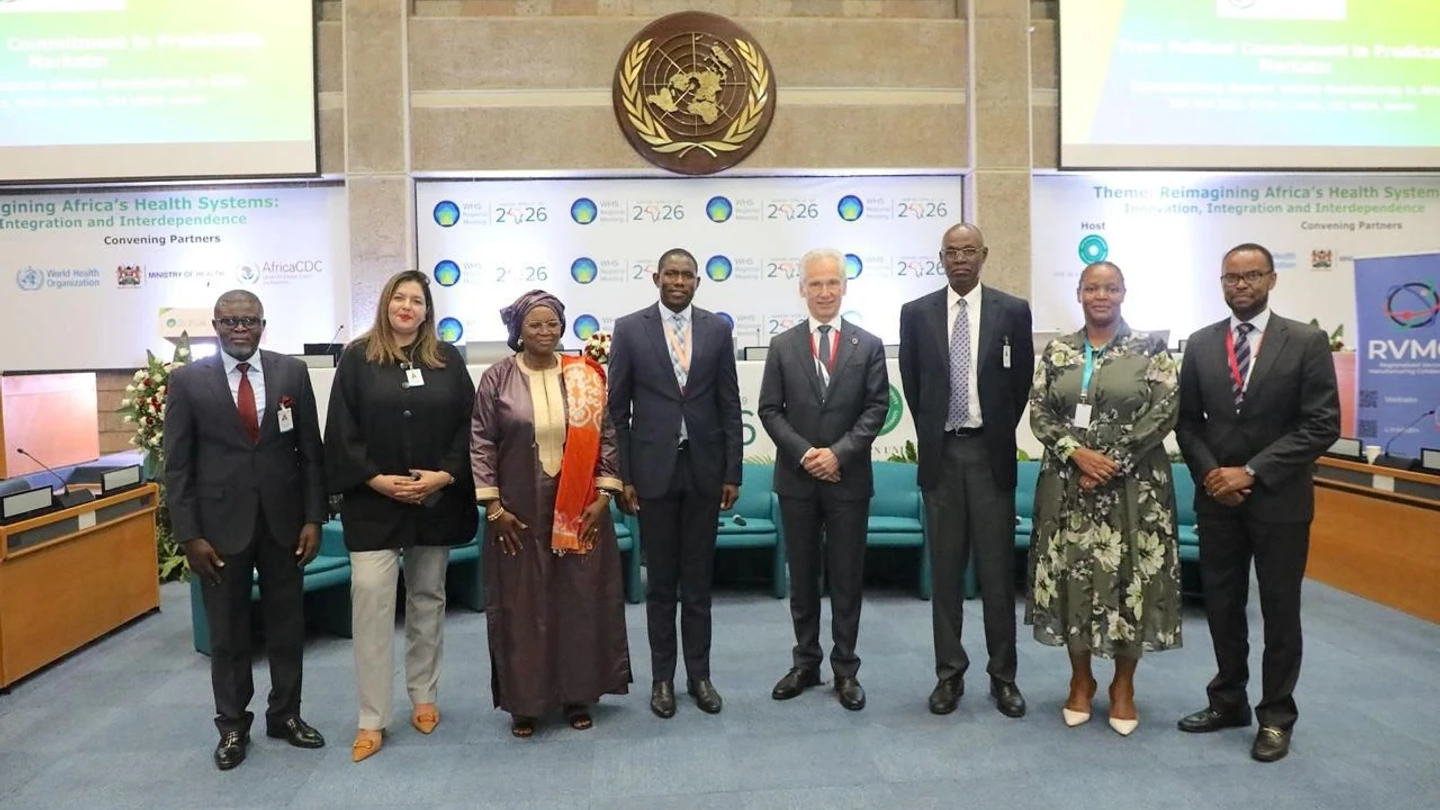
Predictable demand remains the single most important determinant of sustainability. This was the central message following the RVMC’s panel discussion at the World Health Summit Regional Meeting in Nairobi in April 2026.
Panelists emphasized the need to turn political commitments into practical market-shaping instruments. Important steps are already being taken, including the Government of Kenya’s announcement of a multi-year advance purchase agreement with the Kenya BioVax Institute to procure locally made vaccines. In addition, the advancing of the Africa CDC initiative on African Pooled Procurement Mechanism (APPM) was also recognised.
The Call to Action:
Political commitment to strengthening African vaccine manufacturing is now well established. Across the continent, governments and partners are working to expand production capacity, improve vaccine access, and strengthen regional supply security. The priority now is implementation: translating this ambition into coordinated action that creates the conditions for regionalized vaccine manufacturing to become sustainable.
However, demand alone will not be sufficient. Sustainable regionalized vaccine manufacturing also depends on a wider set of enabling conditions, including stronger regional coordination, clear and timely regulatory pathways to market, and appropriate financing. These, together, will support the production and supply of safe, effective, quality-assured vaccines from African manufacturers.
Building on this panel discussion, the RVMC Secretariat calls on governments, regional institutions, financiers, regulators, and manufacturers to focus on four execution priorities for African vaccine manufacturing:
1. Encourage Ecosystem Coordination through Shared Roadmaps and Priorities
To build resilient regional vaccine manufacturing ecosystems, investment, production, procurement, regulatory preparedness, financing, and enabling support should be encouraged to converge around shared roadmaps and priorities. This can help ecosystem actors identify where their contributions are most needed, reduce duplication, strengthen complementarity, and improve the commercial viability of priority projects.
- AU Member States, regional institutions, manufacturers, financiers, regulators, and technical partners should use shared African vaccine manufacturing roadmaps to align priorities, clarify roles, and guide national and regional decisions to support the production of relevant vaccines through procurement, finance, regulatory and other mechanisms.
- These roadmaps should articulate priority capabilities across both routine production and outbreak response, and shape incentives to support the deployment of those capabilities. This would help ensure capacity is built across value chain, rather than duplicating capabilities, and that the support for the ecosystem is directed towards the areas that are best placed to deliver.
2. Strengthen Demand Certainty for African-Made Vaccines
Sustainable African vaccine manufacturing needs credible, multi-year demand certainty and clear routes into procurement systems for immunization. Governments, regional institutions, procurers, financiers, and partners should turn political commitments into bankable purchasing signals, aligned with global procurement practices on forecasting, financing, quality assurance, affordability, and security of supply.
- Demand-shaping should focus on priority vaccines with strong public health value and a credible path to production, procurement, and uptake, including through country, regional, or global procurement channels.
- Countries should continue to use multi-year purchasing frameworks to translate immunization priorities into credible demand signals, backed by budgets, product specifications, procurement timelines, and quality-assured procurement requirements.
- Regional procurement, including the African Pooled Procurement Mechanism, should aggregate country demand, clarify priority products, volumes, and timelines, and create greater predictability for African manufacturers, even during the transition from the global vaccine procurement systems.
- These efforts should complement and build on global vaccine procurement systems. UNICEF Supply Division already supports countries with vaccine forecasting, timely financing, long-term contracting, pooled procurement, affordability, and visibility of future supply needs, but still lacks clear signals from African governments on their desire to preferentially receive African-made vaccines. Strengthening demand for Africa-made vaccines would therefore entail the selection of the vaccines by countries, through UNICEF, when they become available.
- Market-shaping tools, such as GAVI’s AVMA, Kenya’s targeted advance purchase agreements, or temporary price premiums, should create credible opportunities for African manufacturers while maintaining standards for safe, effective, quality-assured, affordable, and reliable vaccines.
3. Build Trust Through Quality and Regulation
As new or expanded manufacturing capacity comes online, trust needs to be built early through strong regulatory systems, clear quality expectations, and predictable pathways to the regional market. Without this, procurers may continue to default to the already established suppliers, and African vaccine manufacturers may struggle to secure uptake even where production capacity exists.
- Strengthen national regulatory authorities so they can provide credible and timely oversight of African-made vaccines. This includes improving review capacity, GMP inspections, lot release, pharmacovigilance, and the ability to sustain these functions over time.
- Support manufacturer regulatory-readiness so African manufacturers can meet quality and regulatory expectations from the outset. This includes preparing robust dossiers, maintaining GMP compliance, responding promptly to deficiencies, and building quality systems that support national approval, regional market access, and WHO prequalification, where relevant.
- Accelerate regional regulatory harmonisation through reliance, joint assessments, work-sharing, and coordinated inspections, so that vaccines shown to be safe, effective, and quality-assured can reach wider regional markets faster and more consistently, while reducing unnecessary duplication across countries.
4. De-Risk Early Stages of Manufacturing to Unlock Investment
Access to financing is often constrained by weaknesses in the broader operating environment. Where demand is unclear, procurement pathways are fragmented, regulatory routes are uncertain, or technology-transfer plans are not yet credible, even strategically important manufacturing projects can struggle to attract investment. The preceding recommendations focus on strengthening these conditions. Alongside this, financing must be structured around the specific needs, risks, and maturity of priority projects, rather than treated as a one-size-fits-all intervention.
- Different projects will require different forms of support depending on their stage of development, technical readiness, regulatory pathway, demand outlook, and commercial prospects. Financing approaches should therefore be designed around the specific barriers each project faces, including through concessional loans, guarantees, patient capital, or other risk-sharing tools where needed.
- Use public and concessional finance to reduce early-stage risk including support for feasibility studies, technical advice, and technology-transfer preparation, helping projects become more investable and better able to attract private capital over time.
- Link financing to implementation milestones and practical delivery support. Already committed funds should be deployed quickly to priority projects, with clear milestones for progress. Financing should also be coordinated with the practical support needed to deliver, including demand commitments, regulatory readiness, technology transfer, and workforce development
From Dialogue to Delivery
The commitments are clear. The tools exist. The priority now is execution.
The RVMC Secretariat, as an independent platform, will continue to support this agenda through advocating for regionalized vaccine manufacturing, aligning stakeholders and initiatives, strengthening the shared evidence base for decision-making, and tracking progress to support accountability.
The window for action is open, but it will not remain open indefinitely. The next phase must be defined, not by new commitments, but by coordinated delivery - together, decisively, and at scale.